

Last updated: 3 août 2026
Confusing French Verbs: The "M-O-T-S" Disambiguation Framework
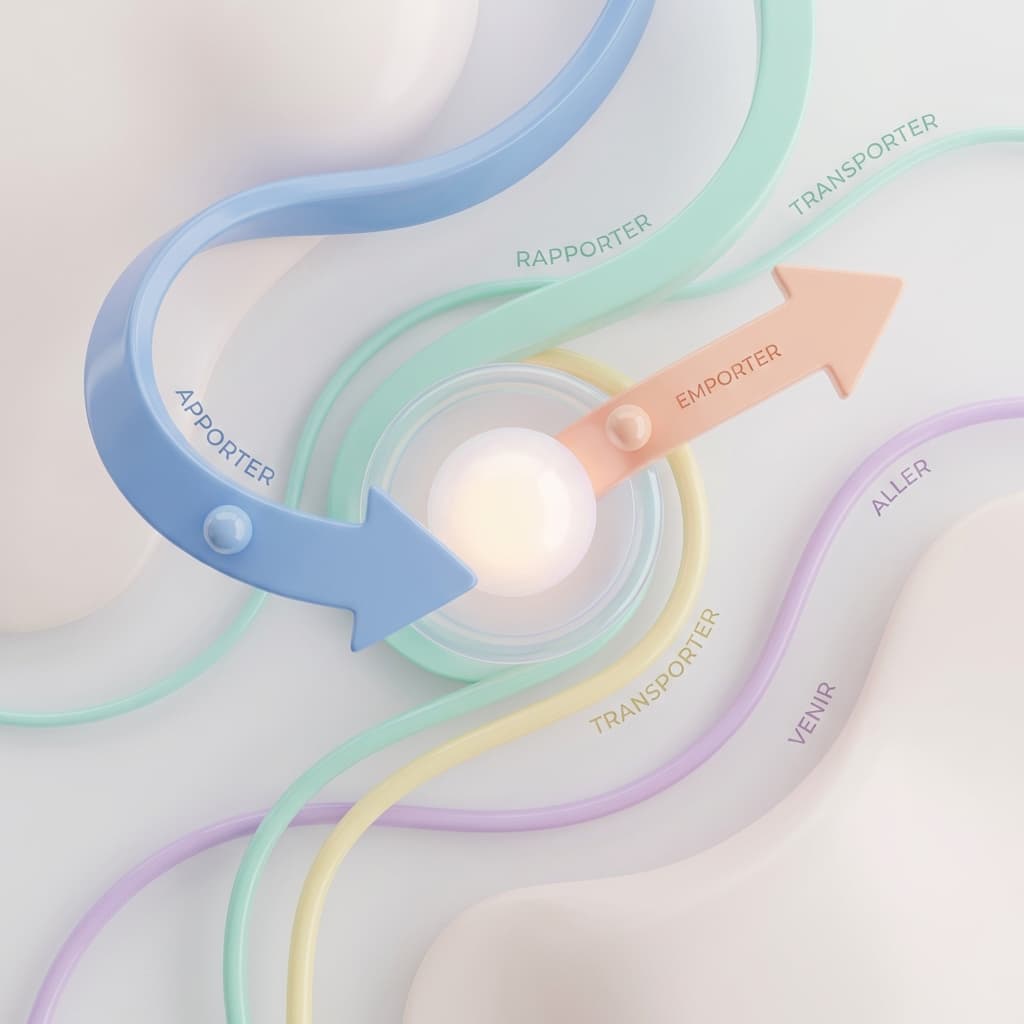
Confusing French Verbs: The "M-O-T-S" Disambiguation Framework
One of the fastest ways to lose points in the TEF or TCF Canada Speaking exams is to misuse a common French verb pair.
In English, one verb can cover multiple situations (e.g., "to bring" or "to know"). In French, however, verbs are highly specific to the context. If you say "J'ai amené mon ordinateur" (I brought my computer), a native speaker will immediately cringe, and your grammatical precision score will plummet.
To achieve a CLB 9+ (C1/C2), you must master these subtle semantic differences. To stop translating from English and start using French verbs accurately, use our M-O-T-S Disambiguation Framework.
What is the M-O-T-S Framework?
The framework helps you logically distinguish between the four most commonly confused verb pairs that trap candidates during the exam: